
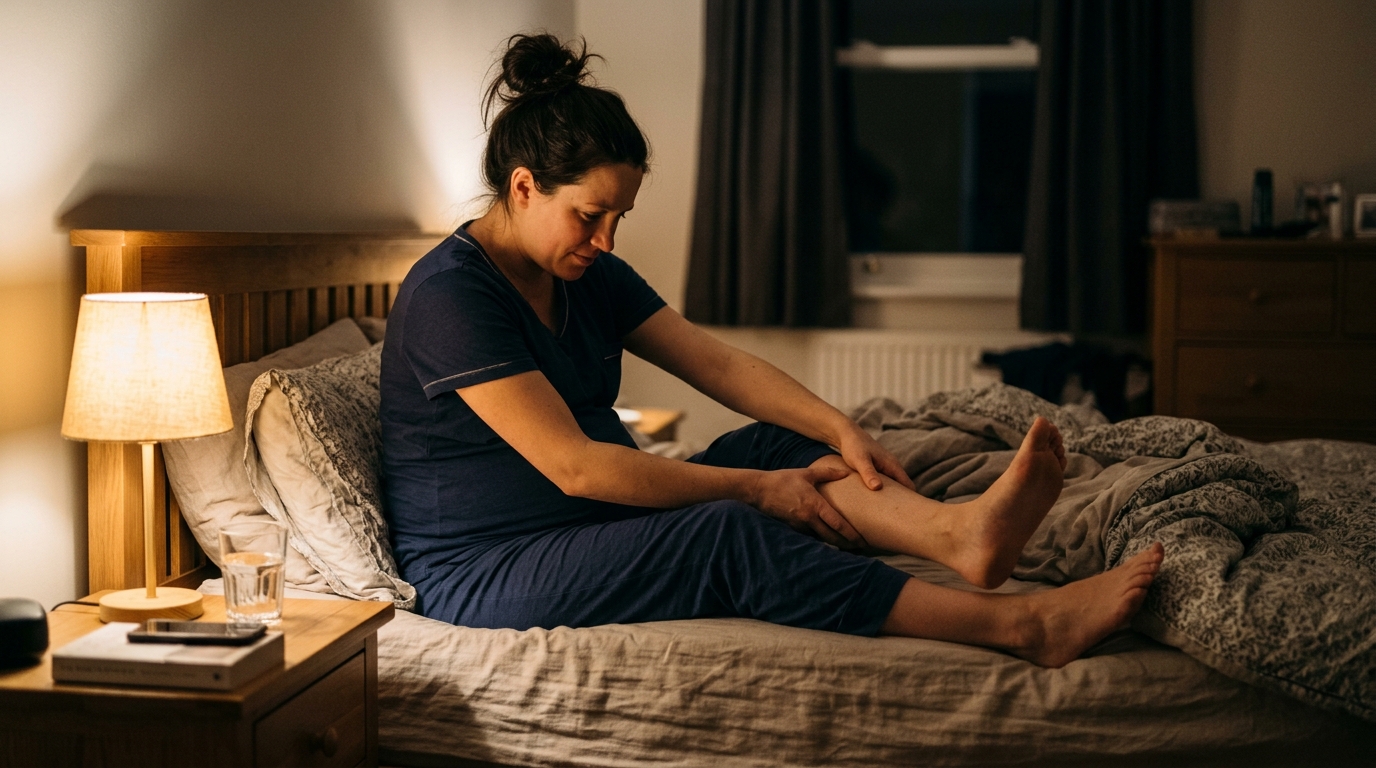
I was 31 weeks pregnant with my second and it was around 3am on a freezing January night when it happened. I stretched my legs out under the duvet, pointed my toes the way you do when you have a good long stretch, and my right calf seized into a knot so tight I actually yelped. I sat bolt upright in the dark, gripping my leg, muscle rock hard, hissing through my teeth so I would not wake my husband. It felt like someone had grabbed the back of my leg and was wringing it out like a wet cloth. And I could not make it stop.
If you have been woken up like that, gasping and clutching your calf in the dark, you have my full sympathy, because there are few things that yank you out of sleep quite so cruelly. Leg cramps in pregnancy at night are incredibly common, especially later on, and they are one of those symptoms nobody really warns you about. In this post I want to explain why they happen, how to stop a cramp fast when one strikes, how to head them off before bed, and the one warning sign that means you should stop reading and phone your midwife.
Why leg cramps in pregnancy hit at night
Leg cramps in pregnancy tend to show up in the second and third trimester, and they love the night. For me they started around 24 weeks and got worse as my bump grew. There is no single tidy cause, which is part of why they are so annoying, but a few things stack up together.
Your body is carrying a lot more weight and working harder, and your legs feel it. Your growing uterus presses on the blood vessels and nerves that run down to your legs, which can affect circulation and set the muscles off. Levels of minerals like calcium and magnesium shift in pregnancy, and that can make muscles more twitchy and prone to cramping. Add in the fact that you are lying still for hours at night, often with your toes pointing down under the covers, and your calf muscle is primed to seize.
That is why the classic pregnancy leg cramp comes at 2 or 3am rather than midday. You are still, you are warm, your feet drift into a pointed position, and the muscle grabs. Knowing that actually helps, because the fix and the prevention both come straight from those causes.
How to stop a cramp fast when one strikes
When the cramp has hold of you, you want it gone, not a lecture. The single most useful thing to know is this. Flex your foot, do not point it.
Every instinct in a cramp tells you to point your toes and stretch the leg long. Do not. That shortens the calf muscle and makes the cramp worse, which is exactly the trap I fell into at 31 weeks. Instead do the opposite.
- Straighten your leg and pull your toes and the top of your foot up toward your shin, so you feel a stretch along your calf
- If you cannot reach, loop a towel or a scarf around the ball of your foot and gently pull it toward you
- Hold the stretch and breathe until the muscle lets go, usually within a minute
- Then rub and massage the calf firmly to ease the tightness that lingers
- Get up and walk around the room for a minute or two, and put your weight through the foot
A warm flannel or a hot water bottle held against the calf afterward helps the ache that can hang around for a day. Do not be surprised if the muscle feels bruised and tender the next morning. That is normal after a hard cramp.
How to prevent night cramps before they start
Stopping a cramp is good. Not having one is better. These are the things that actually cut my cramps down in the last trimester, and none of them are complicated.
Stay properly hydrated
A dehydrated muscle cramps more easily. I aimed for water steadily through the day rather than gulping loads at night, which just sends you to the loo. If your wee is dark, you are behind. Pale is the goal.
Stretch your calves before bed
This was the biggest winner for me. Standing an arm's length from a wall, hands flat against it, step one foot back and press that heel into the floor until you feel the calf stretch. Hold for about 30 seconds each side. Doing this every night before I got into bed noticeably dropped how often I woke up cramping.
Eat magnesium rich foods
Magnesium is the mineral most linked to muscle cramps, and pregnancy raises what you need. I leaned into food first, which is exactly the kind of thing I cover in the pregnancy nutrition side of things too, since good eating quietly fixes so many late pregnancy niggles.
- Nuts and seeds, especially pumpkin seeds and almonds
- Dark leafy greens like spinach
- Bananas, which also give you potassium
- Wholegrains, beans, and a bit of dark chocolate, happily
Some midwives suggest a magnesium supplement if cramps are bad, and there is some evidence it can help, but do not start one off your own back. Ask your midwife or doctor first so the dose and timing are right for you.
Change your position and support your legs
How you lie matters. Sleeping on your side, which is the position most midwives recommend in later pregnancy anyway, takes pressure off those big blood vessels. I go into the details in the best sleeping position in pregnancy, but the short version is left side with a pillow between your knees. Keeping your feet from pointing down under tight, tucked-in covers helps too. Loosen the duvet at the bottom so your toes can sit in a more neutral, flexed position.
When to call your midwife or doctor
Ordinary leg cramps, the kind that seize your calf and let go within a minute or two, are harmless even though they are horrible. They are not a sign anything is wrong with your baby. But there is one situation you must never brush off as just a cramp.
If you have pain in one calf that comes with swelling, warmth, redness, or tenderness, and it does not ease off the way a cramp does, call your midwife or doctor straight away. A hot, swollen, painful calf, usually in one leg only and constant rather than gripping and releasing, can be a sign of a blood clot, known as a DVT. Pregnancy makes clots more likely, so this is one to take seriously and get checked the same day.
The difference is worth spelling out. A normal cramp is a sudden tight spasm that eases within a minute or two and leaves the muscle a bit sore. A possible clot is a persistent, ongoing pain in one calf, with the leg looking swollen, red, or feeling warm to the touch, and it does not stretch away. If you are ever unsure which one you are dealing with, do not sit at home wondering. Phone and ask. Midwives would far rather check a leg that turns out fine than miss one that is not.
Also mention it at your next appointment if cramps are happening most nights and wrecking your sleep, or if they come with numbness or weakness. Most of the time you will get reassurance and a few practical tips, but it is always worth flagging.
You will get through it
Night cramps are one of those pregnancy things that feel enormous at 3am and much smaller in the morning. The good news is they usually ease off once your baby arrives, and until then you have real tools. Flex the foot instead of pointing it. Stretch your calves against the wall before bed. Drink enough water, eat your greens and nuts, sleep on your side with a pillow between your knees, and keep the covers loose at your feet.
That January night at 31 weeks, I did everything wrong and pointed my toes and made it worse. By the time my son came I had it down to a quick calf flex and a mumble in the dark, back to sleep in a couple of minutes. You will get there too. And you will keep the one rule that matters most, which is that a hot, swollen, painful calf is never just a cramp, so pick up the phone.