
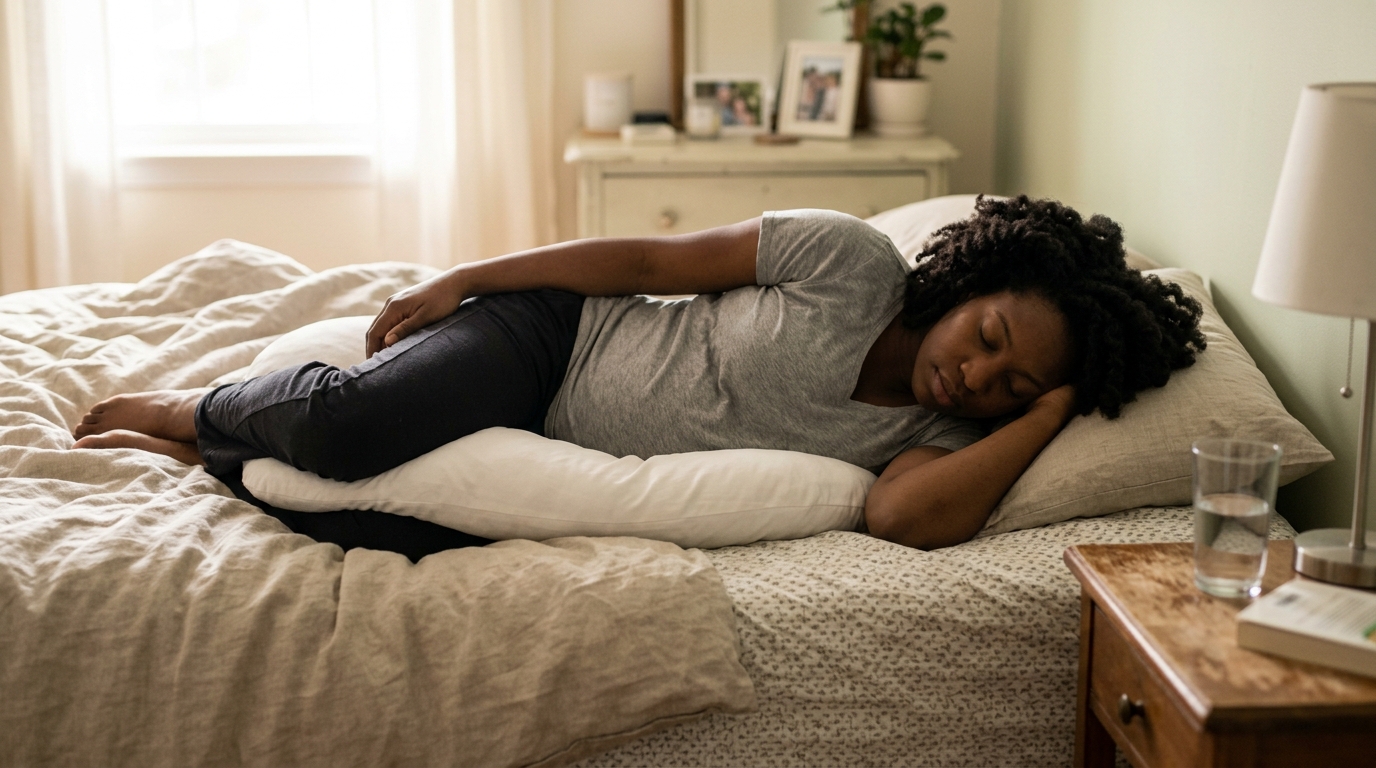
At 29 weeks with my first, I woke up at 2am flat on my back, heart pounding, convinced I had done something terrible. I had read one of those scary internet posts earlier that day, and my half-asleep brain went straight to the worst place. I lay there in the dark doing the math on how many hours I might have been on my back, feeling like a failure before I had even fully woken up.
I wish someone had just sat me down and told me the calm version of the truth. So that is what I want to do for you here. This post covers the best sleeping position when pregnant, why your back stops being a good option as you grow, the pillow setups that actually got me comfortable, and what to do when you wake up on your back anyway, because you will. We will also cover when a bad stretch of sleep is worth mentioning to your midwife.
The best sleeping position when pregnant is on your side
Let me give you the answer before the explanation. The best sleeping position when pregnant is on your side, and if you have a preference, the left side is the classic recommendation. That is it. Side is the goal.
The reason is about blood flow. As your uterus gets heavier, especially from around the middle of pregnancy onward, lying flat on your back lets its full weight press down on a big vein called the inferior vena cava. That vein carries blood from your lower body back up to your heart. Squash it, and less blood circulates, which can leave you dizzy, breathless, or just plain uncomfortable, and it can reduce flow to the baby too. Sleeping on your side keeps that vein clear and everything moving the way it should.
The left side gets the crown because your vena cava runs slightly to the right of your spine, so lying left takes the most pressure off it. But right side is completely fine too. Do not lie awake stressing about which side you drifted onto. Either side beats your back, and a real night of sleep on your right is worth far more than a sleepless night policing yourself to stay left.
Side sleeping is the win. Which side is a rounding error. Sleep is the point.
Why your back stops working later on
Early in pregnancy, before the bump has much weight to it, back-sleeping is not a concern. You can sleep however you land. The guidance to avoid your back really applies from around 28 weeks, the start of the third trimester, when that vena cava pressure becomes a real thing.
Most women find their own body starts refusing the back position anyway. You roll over and suddenly feel breathless, queasy, or lightheaded, and you naturally shift to your side. That is your body's alarm system working exactly as designed. It is annoying at 3am, but it is protective. Back-sleeping in late pregnancy tends to get physically uncomfortable long before it becomes an actual problem, and the discomfort is the point. It moves you.
Stomach sleeping, in case you are wondering, sorts itself out. By the second trimester there is simply a bump in the way and it becomes impossible for most of us. No harm in it while it lasts, but biology retires that option on its own.
Pillow setups that actually work
Nobody warns you that side-sleeping for months is genuinely hard on your hips and back if you do not prop yourself right. Pillows are what got me through both pregnancies. Here is what worked.
- A firm pillow between your knees. This keeps your hips stacked and takes the strain off your lower back. It is the single most important one.
- A pillow or rolled towel tucked under your bump once you are past about 24 weeks. It supports the weight so it is not pulling on your back all night.
- A pillow behind your back to lean against. Wedge it in so if you roll, you land at a gentle tilt rather than flat, which is enough to keep the pressure off that vein.
You do not need to buy a giant pregnancy pillow if money is tight, though plenty of women swear by them. Three regular pillows arranged well do the same job. If a wedge of extra pillows under your upper body helps with heartburn or a stuffy nose too, use them. Whatever gets you comfortable and on your side is the right setup.
If you are lying awake anyway, staring at the ceiling for hours, that is its own kind of exhausting and it deserves real strategies. We went deep on the wide-awake middle-of-the-night version of this in our post on pregnancy insomnia at 3am, so if falling back asleep is your real struggle, start there.
What to do when you wake up on your back
Here is the reassurance I needed at 29 weeks. If you wake up on your back, you have not harmed your baby. Just roll to your side and go back to sleep. That is the whole fix.
Your body is smart. In late pregnancy, if lying on your back starts reducing your blood flow, you feel unwell and you wake up or shift, which is exactly what happened to me. That waking is the system working. The current advice from experts is simple. Start the night on your side, and if you find yourself on your back, just turn over. You are not meant to stay perfectly still all night, and no one can. It is about how you settle to sleep, not policing every unconscious minute.
The back-support pillow I mentioned helps a lot here. Propped at a slight tilt, most rolls land you leaning rather than fully flat. Do that and let the rest go. Lying awake in a spiral of worry does more harm to your rest than a few minutes on your back ever will.
When to mention sleep problems to your midwife
Bad pregnancy sleep is normal, but some things are worth flagging at your next appointment or sooner. You are never being a bother by asking. That is literally what your midwife is there for.
- Loud snoring that is new, or gasping and choking in your sleep that your partner notices. This can point to sleep apnea, which is worth screening in pregnancy.
- Sleep wrecked by strong restless or crawling sensations in your legs, which can be linked to low iron.
- Waking breathless even while lying on your side, or a racing heart that does not settle.
- Severe hip or back pain that stops you sleeping at all, no matter how you prop yourself. There are physio options that help.
- Any change in your baby's usual movement pattern. This one is never a wait-and-see. Call the same day.
Ongoing back pain that ruins your nights is common in the third trimester and there is genuine relief available, which we covered in our guide to third trimester back pain. Do not just grit your teeth through it if it is stealing your sleep.
The calm version of the truth
So here is what I would tell my 2am self. The best sleeping position when pregnant is on your side, ideally left but honestly whichever side lets you sleep. Your back becomes a poor choice in the third trimester because of one squashed vein, and your own body will usually nudge you off it. Build a pillow nest, start the night on your side, and if you wake up on your back, just roll over and let the panic go. You are doing everything right. Now go get some rest while you still can, because the newborn has thoughts about your sleep schedule that we will get into another day.