
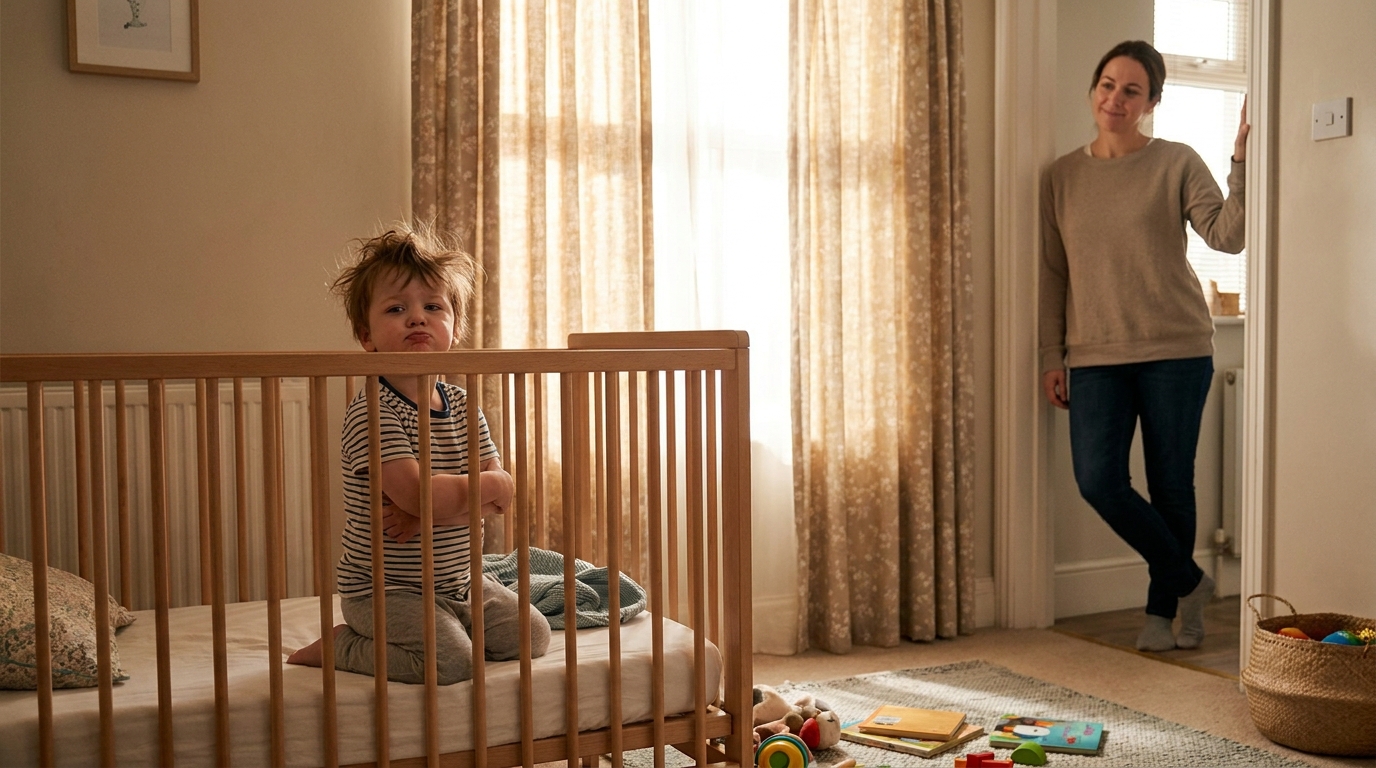
For two solid weeks my 2-year-old refused his afternoon nap. By 4pm he was glassy-eyed and screaming. By 5pm he was either falling asleep on the kitchen floor or being so awful at dinner that I gave up and put him to bed at 5:45pm. Then he would wake at 5am and start the whole cycle again.
I was sure he had dropped the nap. I read a hundred articles about how some kids drop it earlier than others. I bought him quiet-time toys. I rearranged the day.
Three weeks in I shifted his nap from 12pm to 1:30pm by accident on a busy day, and he slept for two hours. The "dropped" nap was not dropped. It was just being offered at the wrong time.
If your toddler is refusing the nap and you are not sure whether to fight for it or let it go, here is what actually helps you decide and what works either way.
Why toddlers refuse naps
The most common cause of nap refusal between 18 months and 3 years is not that the child has outgrown the nap. It is one of three other things, in this order of likelihood:
1. The timing is wrong. Sleep pressure (how tired the body is) builds at a specific rate. If the nap is offered too early, there is not enough pressure to fall asleep. Too late and they are overtired, which paradoxically makes it harder to settle. 2. The morning nap has shifted things. If the child is still doing two naps and the morning one is too long or too late, the afternoon nap will not happen. 3. A developmental leap is in progress. Language explosions, learning to climb, separation anxiety waves. The brain is processing in ways that disrupt daytime sleep first, night sleep second.
True nap-dropping (the child genuinely no longer needing the daytime sleep) usually happens between 2.5 and 4 years old, and the signs are different from a phase of refusal.
How to tell if your toddler is really dropping the nap
A real nap-drop has consistent signs that you see for at least 2 to 3 weeks, not just a bad week.
Signs of true nap-dropping:
- The child refuses the nap for 14+ consecutive days even with consistent timing
- They are cheerful and functional through to bedtime without it
- They still go to bed at the usual time and sleep through the night
- They do not fall asleep in the car, the buggy, or randomly on the sofa at 4pm
- They are 2.5 years or older
- They can be reasoned with about resting quietly without sleeping
Signs the nap is not actually being dropped, just refused:
- They are under 2.5 years
- They are exhausted and miserable by mid-afternoon
- They fall asleep in the car or pram if you go anywhere
- Night sleep is getting worse, not the same or better
- Bedtime is getting harder
- They are waking earlier in the morning
- Behaviour at 4 to 5pm has gone from challenging to genuinely difficult
If your toddler is in the second column, the nap is being refused, not dropped. The fix is usually adjusting the conditions, not abandoning the nap.
The fixes that bring the nap back
Try these in order.
Fix 1: Shift the nap time
The single most common solution. Try moving the nap 30 to 45 minutes later than you have been offering it. A child who refuses at 12pm often settles at 12:45 or 1pm.
The right nap time for a 2-year-old is usually 5 to 6 hours after waking. If they wake at 6:30am, aim for nap at 12:30 to 1pm. If they wake at 7:30am, try 1:30 to 2pm.
Give the new time a week before deciding it has not worked.
Fix 2: Cut the morning nap if they still have one
If your child is between 13 and 18 months and refusing the second nap, they may be transitioning to one nap. Drop the morning sleep entirely. Push the single nap to early afternoon, ideally 12 to 12:30pm. This often resolves nap refusal within 4 to 7 days.
The transition is messy. The first week often includes some over-tiredness at 11am and early evening crashes. Push through. By week two the new pattern usually settles.
Fix 3: Tighten the pre-nap routine
A short familiar wind-down genuinely helps a brain that has been busy all morning settle into sleep. Five minutes is enough:
- Close the curtains or use blackout blinds
- Switch on white noise (the same one you use at night)
- One book on the bed or on your lap
- Specific cuddle and goodnight phrase
- Lay down with their lovey or comforter
- Leave the room
Doing the same five things in the same order every day signals to the brain that sleep is coming.
Fix 4: Quiet time instead of "no nap"
For days when the nap genuinely will not happen, do not give up the nap window entirely. Instead, offer quiet time: the child stays in their bed or cot with books or a soft toy for the full nap length (60 to 90 minutes), lights dim, white noise on.
Many children resist sleep but if you ride out the first 15 minutes calmly, they fall asleep on their own. The ones who do not at least get the rest, which buys you a manageable afternoon.
The phrase that works: "It is rest time. You do not have to sleep. You have to stay in your bed with the books."
Fix 5: Move bedtime earlier on no-nap days
If they genuinely do not nap on a given day, move bedtime forward by 30 to 60 minutes. A 7:30pm bedtime moves to 6:30pm or 7pm. Without the nap, they reach their tired-enough state earlier in the evening.
Going to bed at the normal time after a missed nap usually means an overtired meltdown, hours of resettling, and worse night sleep. Earlier bedtime is the easier path.
What happens during the nap transition
Most toddlers genuinely transition out of napping between ages 3 and 4. The transition itself takes a few months and usually goes through three stages.
Stage 1: Inconsistent napping. Some days yes, some days no. Length varies wildly. Lasts 4 to 12 weeks.
Stage 2: Quiet time replaces napping. They are in their room for the nap window but sleep maybe once or twice a week. Lasts 1 to 6 months.
Stage 3: Nap is fully gone. No daytime sleep, longer night sleep, bedtime moves earlier.
During stages 1 and 2, keep offering the nap window even on days they do not sleep. The window is valuable even without sleep. It is when you get to drink a cup of tea while still warm.
When refusing the nap is something else
Most nap refusal is timing or developmental. A few situations need different attention:
- The child is genuinely sick (fever, vomiting, or signs of illness)
- The child has started a new big change (new sibling, nursery, house move) and is also struggling with night sleep
- The child has begun snoring loudly or has signs of sleep apnoea
- The refusal is paired with sudden behavioural changes that worry you
- The child is in pain (teething, ear infection, constipation)
- A previously easy child has stopped sleeping in the day AND at night for more than 2 weeks
These warrant a GP appointment or a chat with your health visitor.
Related reading
What to tell yourself at 2pm with a screaming toddler
The fact that they are screaming is the evidence that they need the nap, not the evidence that they have outgrown it. If they had genuinely outgrown the nap, they would be cheerful and functional at 4pm.
Tomorrow, shift the timing. Tighten the routine. Hold the window even if they do not sleep. The nap returns more often than not for at least another 6 months.
This phase is temporary. The day a toddler genuinely drops the nap is usually a much calmer day than a nap-refusal day. You will know when it happens because the screaming will stop and the afternoons will become tolerable, just shorter for you.
Until then, the nap is worth fighting for. Tomorrow. Same time, slightly later.