
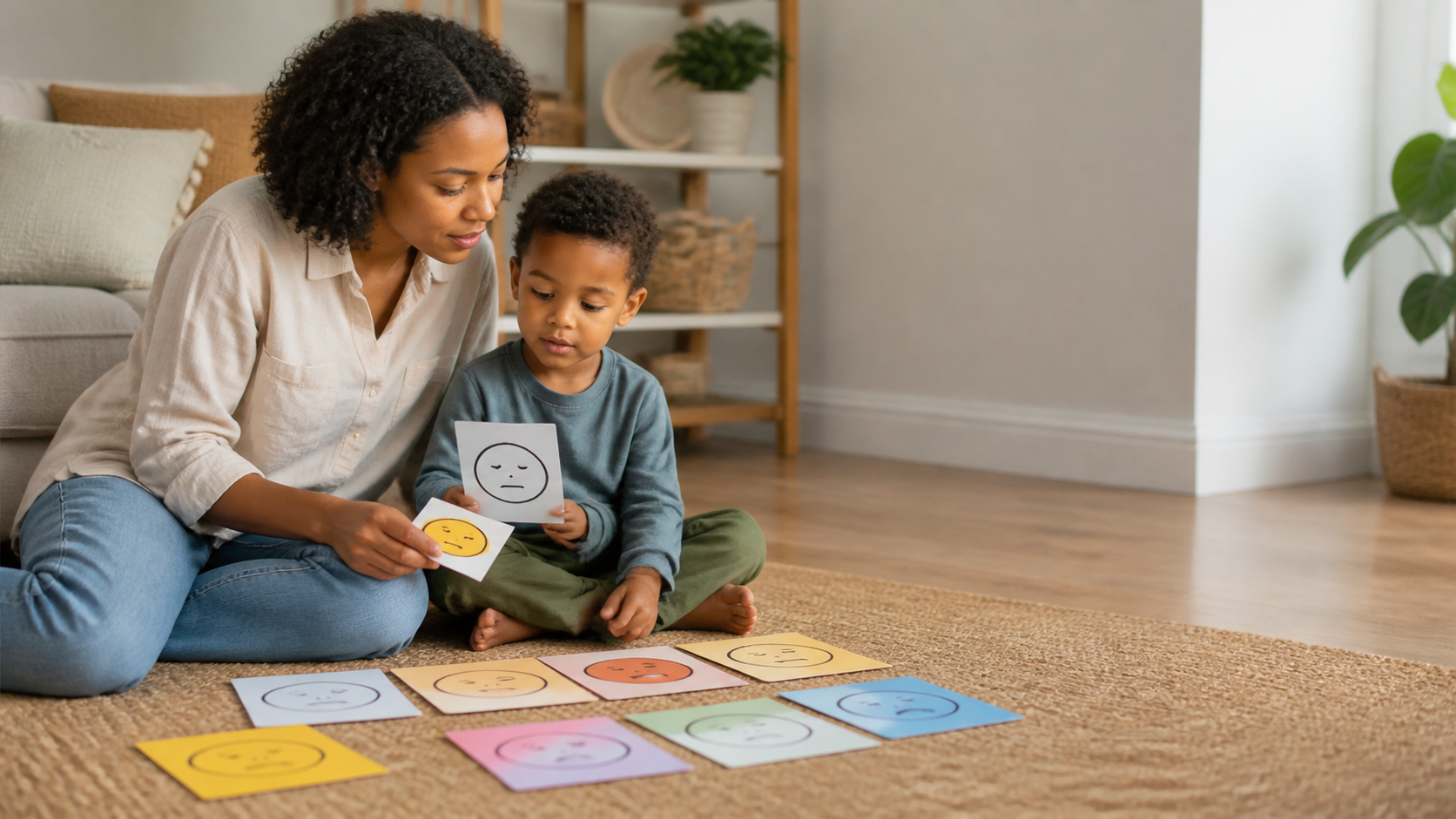
When a small child throws a shoe because their toast was cut into triangles, it is tempting to say, "Use your words." The trouble is that they may only have three words available: no, mine and biscuit.
Feeling words are taught, not discovered by magic. The best time to teach them is not during a full-volume meltdown. It is in the car, in the bath, while reading, and in those ordinary ten minutes when nobody is already cross.
Start smaller than the feelings chart
For toddlers, four words are plenty: happy, sad, mad and scared. Add frustrated when they are ready. A preschooler does not need to distinguish disappointed from overwhelmed before they can tell you, "I am mad because it broke."
Name what you notice without insisting you are right. Say, "You look disappointed that we had to leave," rather than, "You are disappointed." If they correct you, good. They are practising.
The American Academy of Pediatrics describes this as emotion coaching: notice the feeling, put a name to it, acknowledge it, then address what the child needs. You can validate the feeling without approving the behaviour. "You are angry that I said no. It is okay to be angry. It is not okay to hit me."
Put the words into your own day
Children learn more from the weather in your voice than from a poster on the wall. Let them hear simple, contained examples:
- "I am frustrated because the keys are missing. I am going to look slowly."
- "I feel nervous about this appointment, so I am taking a breath."
- "I was sharp with you. I am sorry. I was stressed, but that was not your fault."
That last one matters. Repair teaches a child that feelings do not make someone bad and that relationships can recover after a rough moment.
Give them a script before they need it
Practise when everyone is calm. A child can point to a feeling card, squeeze a cushion, ask for a cuddle, stamp outside, get a drink, or say, "I need help." Pick two options that work in your home. Ten options will not be remembered when a tower has just fallen down.
Books and pretend play help because the feeling belongs to a character first. Pause and ask, "How do you think the rabbit feels? What could help?" The answer may be wonderfully strange. Let it be. You are building the habit of noticing, not administering an exam.
What to say in the actual meltdown
Use fewer words. A flooded child cannot listen to a lecture about emotional literacy.
"You are really mad. I am here. I will not let you throw the blocks."
Then make the room safer and stay nearby. Once the storm has passed, return to the missing skill: "Next time, show me mad hands or say 'help.' We can practise now."
If tantrums are frequent, this guide to toddler hitting can help you respond to the behaviour without treating your child as the problem. And if the feelings arrive around a big change, normal toddler separation anxiety is worth reading too.
When to ask for more help
Big feelings are normal. But speak to your child's clinician if you are worried about persistent distress, aggression that is causing injuries, a sudden major change in behaviour, or a child who cannot take part in ordinary life because anxiety is so strong. You do not need to wait until things are unbearable to ask.
The goal is not a child who is cheerful all day. It is a child who slowly learns: feelings have names, feelings pass, and there is an adult who can help me through them.