
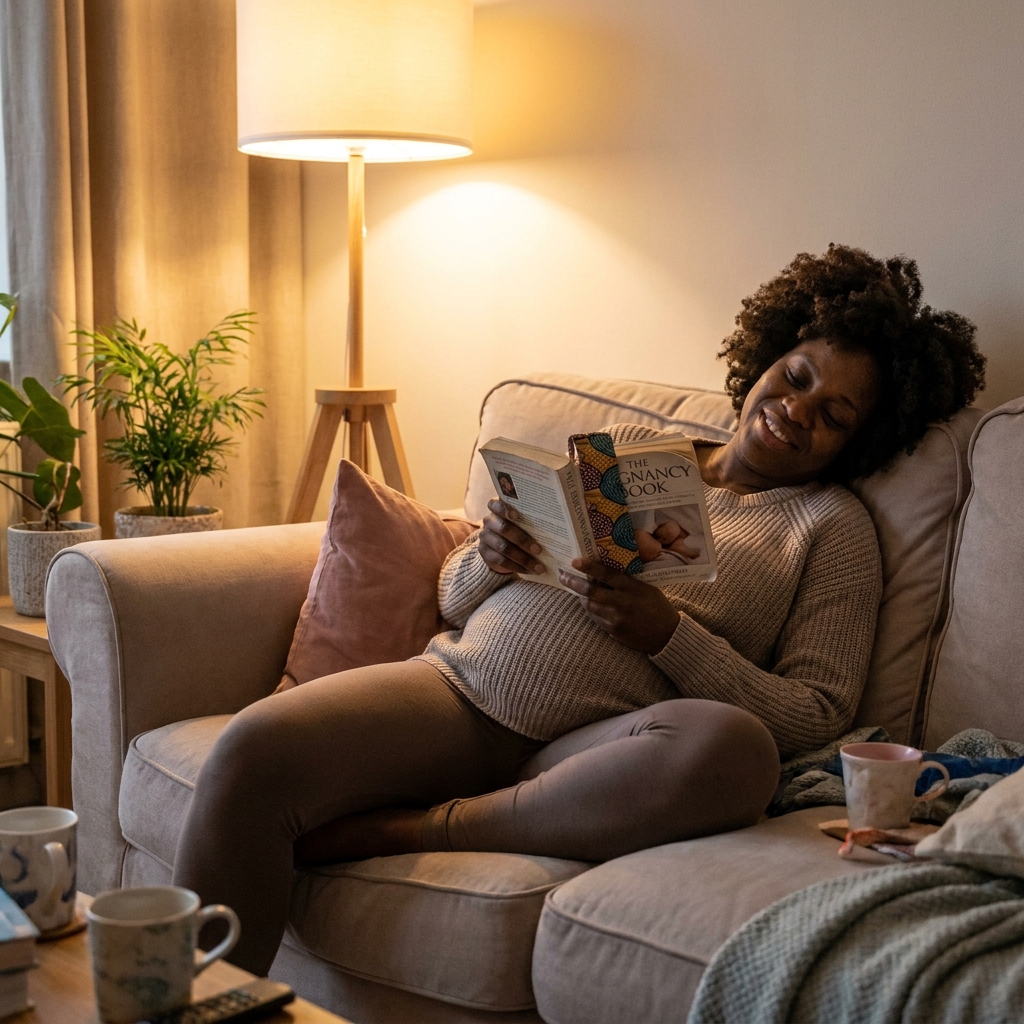
Everyone told you the second trimester was the honeymoon phase. The good months. You would have energy again. You would glow. The nausea would lift. You would buy maternity clothes and feel cute.
You're now 17 weeks in. The nausea has mostly gone, true. But you've got round ligament pain that feels like someone is stabbing you with a chopstick every time you stand up too quickly. Your hips ache. You can't sleep on your back anymore. You're crying once a week at random commercials. The "glow" everyone promised looks suspiciously like exhaustion sweat.
The second trimester is better than the first. It's not actually a honeymoon. Here's the honest version of what to expect.
The good stuff that's actually real
Let's start with what does improve.
- The morning sickness fades. For most people, by around week 14. Some people carry it longer. Some get a brief flare around week 20. But most days will not start with vomiting.
- The exhaustion lifts. The crushing 3pm need to lie down softens. You will have actual energy again. Not pre-pregnancy energy, but something close.
- You can eat real food. Most aversions fade. The smells stop assaulting you. You will start being hungry again, sometimes ferociously.
- You start to look pregnant. Around weeks 16 to 20 for most first pregnancies. Earlier for second babies. You can finally wear the bump.
- You feel her move. Usually somewhere between weeks 16 and 22. The first time it feels like popcorn in your stomach. By week 25 it's unmistakable kicks.
This is the real honeymoon material. Hold onto it.
The stuff they didn't warn you about
1. Round ligament pain
A sharp, stabbing pain in your lower belly or groin when you stand up, sneeze, or roll over in bed. It's the ligaments supporting your uterus stretching as the baby grows. Normal. Annoying. Worst between weeks 18 and 24 for most people.
2. Hip pain at night
Sleeping on your side compresses your hips in a way you never noticed before. By week 20 most people need a pillow between their knees. By week 24, a full pregnancy pillow makes a real difference.
3. Wild dreams that won't stop
The vivid dreams of the first trimester continue into the second. Pregnancy dreams are some of the strangest, most graphic, most emotional dreams of your life. Doesn't mean anything. Brain processing on hormonal overdrive.
4. Random nosebleeds and gum bleeds
Your blood volume is up about 30% by week 20. Your tiny blood vessels in your nose and gums are not used to the new pressure. Brushing your teeth might make them bleed for a few weeks. Carry tissues for nosebleeds. Both are normal.
5. The forgetfulness ("pregnancy brain") is real
A 2014 meta-analysis in Medical Journal of Australia confirmed it: cognitive performance does mildly drop during pregnancy, especially memory and concentration. You're not imagining it. Write things down. Set more reminders than usual.
6. Skin changes
The line down your stomach (linea nigra). Darker nipples. Possibly a butterfly mask across your cheeks (melasma). These are all normal hormonal pigment changes. Most fade after birth. Stay out of strong sun and use SPF on your face.
7. You can't sleep on your back
From around week 20, lying flat on your back compresses a major vein (the inferior vena cava) and can make you dizzy or lower the baby's oxygen. Side sleeping is the rule from here on. Left side is technically slightly better but either is fine.
What to actually do in the second trimester
This is the trimester to get your real prep done. You've got energy back. You can think. You're not yet too big to move comfortably. Use it.
1. Eat the nutrient-dense foods now
Your appetite is back. The baby is doing rapid brain and body development. The foods that pay the biggest dividends right now:
- Oily fish (sardines, salmon) for omega-3s
- Eggs for choline (huge for brain development)
- Leafy greens for folate
- Iron-rich red meat or fortified cereals
- Dairy or calcium-rich alternatives
- Lots of water
2. Move your body
You probably could not exercise in the first trimester. You can probably exercise again now. Walking, swimming, pregnancy yoga, all good. 30 minutes most days. Don't start new high-impact sports, but maintain whatever you were doing before pregnancy.
3. Sort out work logistics
Tell your employer when you feel ready. Most people share the news once they've passed the 12 to 14 week scan. Sort out your maternity leave dates, any flexible working you'll need, and any handover.
4. Sign up for antenatal classes
Most people start them in the second trimester for the third trimester. The good ones book up fast.
5. Don't buy everything yet
The instinct in the honeymoon trimester is to nest hard. Hold off on most of the gear. Babies don't need 90% of what's marketed at them. The third trimester is plenty of time to buy. The second is for resting and eating and walking.
What to watch for
Tell your midwife or GP if you have:
- Severe headaches with vision changes (preeclampsia warning sign)
- Sudden swelling of hands, face, or feet
- Severe abdominal pain that isn't round ligament pain
- Bleeding heavier than spotting
- No felt movement after week 24, after a full hot drink and 30 minutes lying still
- A high fever
Most second trimesters pass without any of these. But it's worth knowing.
What you actually need to hear
The second trimester is genuinely better than the first. It's also not the magical glowing time the books promised. You are going to feel some weeks of real wellbeing and some weeks of being a 24-week-old uncomfortable house. Both are normal.
Your body is doing the steady, less dramatic work of growing this person. The brain is forming. The lungs are practicing breathing. The first kicks are happening. You're not just less unwell. You're at the most productive engineering phase of the whole pregnancy.
Eat well. Walk. Sleep on your side with the pillow. Be patient with the brain fog. Use this stretch to set yourself up before the third trimester arrives with its own list of new things to deal with.
You're doing it right. The honeymoon isn't perfect. But it's real, and it's yours.