
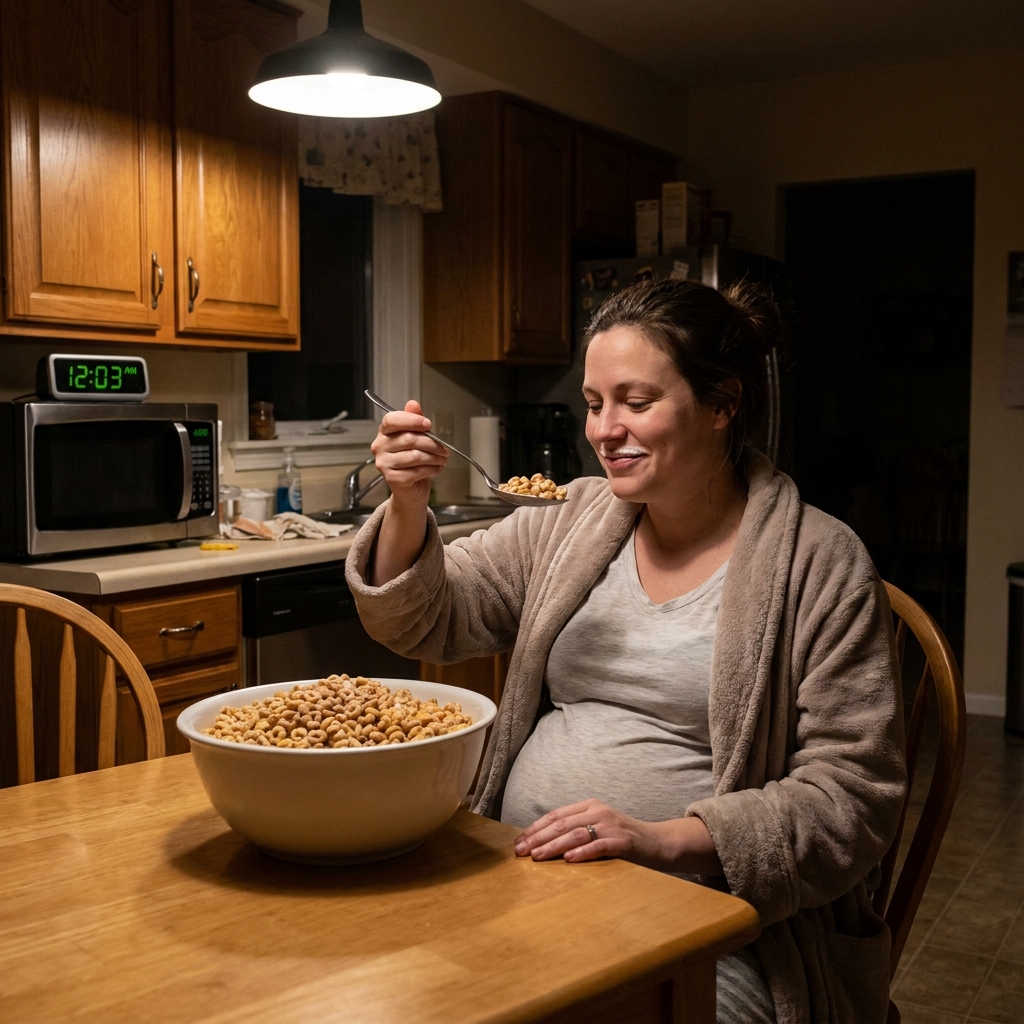
It is 2am. You are sitting bolt upright in bed because lying down felt like swallowing a candle. Your chest is on fire. The piece of toast you had at 7pm is staging a small protest somewhere behind your sternum, and your husband is asleep next to you in a way you have started to resent.
Welcome to third-trimester heartburn. Roughly 8 out of 10 pregnant women get it by the final months, and by week 32 it stops being an occasional nuisance and starts running your evenings.
The good news. There are specific things that actually work, and most of them are not the things your antenatal class mentioned. Here is what worked for me when standard antacids stopped cutting it.
Why pregnancy heartburn gets worse in the third trimester
Two things are happening at once.
First, progesterone (the pregnancy hormone that relaxes smooth muscle so your uterus can stretch) also relaxes the valve at the top of your stomach. That valve normally stops stomach acid from coming back up. When it is loose, the acid floats north.
Second, your baby is now physically squashing your stomach upward. There is less room for food to sit, so even a small meal pushes acid past the relaxed valve. By 34 weeks you have a tennis ball where your stomach used to be.
You cannot fix the cause. You can only manage the symptoms until birth. Both of these will be gone within hours of delivery, which is one of the strangest postpartum upgrades.
The 7 things that actually worked
I tried everything on the standard list. Most of it was useless. These are the ones that genuinely moved the needle.
1. Stop drinking with meals
Counterintuitive. Liquids during food make your stomach contents more voluminous and more liquid, which means more of it sloshes back up the relaxed valve. Drink your water between meals instead. Sip a small amount during eating if you have to, but not a full glass.
Within two days of switching this one habit, my evening heartburn dropped by half.
2. Sleep on your left side, propped up
The valve from your stomach to your oesophagus sits on the right side. Sleeping on your left puts that valve above the stomach content instead of underneath it, so gravity stops working against you.
Add a wedge pillow under your upper back so your chest is higher than your stomach. Three pillows stacked also works but they slide around at 3am. A purpose-built pregnancy wedge is worth the twenty pounds.
3. Eat your last real meal at least 3 hours before bed
If you go to bed at 10pm, finish dinner by 7pm. Heartburn is dramatically worse when there is undigested food in your stomach when you lie down. If you are properly hungry before bed, eat a small dry snack like a couple of crackers or half a banana, not a meal.
4. Cold milk genuinely works (sometimes)
The folk remedy turns out to have some basis. Cold milk briefly coats the oesophagus and neutralises a small amount of acid. It is not a long-term fix and it backfires for some women (the fat content can trigger more acid production later), but a small glass of cold milk at the first sign of burning can buy you forty minutes of relief.
Almond milk and oat milk work similarly without the fat rebound.
5. Identify your top three triggers and ditch them
Generic trigger lists are useless because pregnancy heartburn is personal. Mine were tomato sauce, anything fried, and orange juice. My friend's were chocolate, peppermint, and onions.
Keep a one-week log of what you ate and what set you off. Three triggers usually emerge clearly. Cut just those three (you do not need to give up all the suspect foods, just yours) and you will eliminate maybe 70 percent of your flare-ups.
6. Chew gum after meals
Sugar-free gum for 30 minutes after eating increases saliva production. Saliva is alkaline and gets swallowed, which neutralises the acid that is creeping up. This is not a placebo, it is in the medical literature, and it costs nothing.
Avoid peppermint flavour if mint is one of your triggers. Spearmint or fruit flavours are fine.
7. Ask your GP about ranitidine alternatives
If you are popping antacids (the chewable calcium ones like Tums or Rennies) more than four times a day, you have moved past the dietary stage and you need to talk to your GP. They can prescribe heartburn medications that are safe in pregnancy and far more effective than over-the-counter antacids. Famotidine is the most commonly prescribed in the UK and US. Omeprazole is sometimes used in severe cases.
Both have decades of safety data in pregnancy. Do not white-knuckle it because you are scared to take medication. Unmanaged heartburn can damage your oesophagus and disrupt your sleep, both of which matter more than another month of chalky tablets.
What does not work (do not waste your time)
A few things that get recommended but consistently do not help:
- Drinking apple cider vinegar (the claim is that it balances your stomach acid, but the evidence is thin and the taste is brutal)
- Eating raw almonds (helps some women slightly, useless for most)
- Avoiding all spicy food (only matters if spice is one of your specific triggers)
- Sleeping completely flat (just makes it worse)
When heartburn is not just heartburn
For most pregnant women, third-trimester heartburn is annoying but not dangerous. There are a few situations where it is worth a same-week call to your GP or midwife rather than another night of toughing it out:
- Pain in the upper right abdomen under your ribs, especially if paired with a headache or vision changes (this can be a sign of preeclampsia, a serious blood pressure condition, not just heartburn)
- Burning that wakes you up with shortness of breath
- Vomiting blood or coffee-ground-looking material
- Heartburn so severe you are losing weight or skipping meals to avoid it
- Pain that radiates down your arm or into your jaw (not heartburn, get checked)
These are rare but worth knowing about so you can act fast if they show up.
What to tell yourself at 3am
This ends. Within hours of birth, the valve tightens back up and the baby stops squashing your stomach, and the heartburn vanishes. Most women are eating tomato sauce by week two postpartum with no problem at all.
Until then. Left side, propped up, last meal three hours before bed, gum after dinner, cold milk in the kitchen if it gets bad. And if all that is not enough, you have permission to take the medication your GP prescribes, no guilt, no second-guessing.
You are growing a person on the inside of your ribs. The fact that everything is on fire is not a failure. It is biology. You are allowed to manage it.