
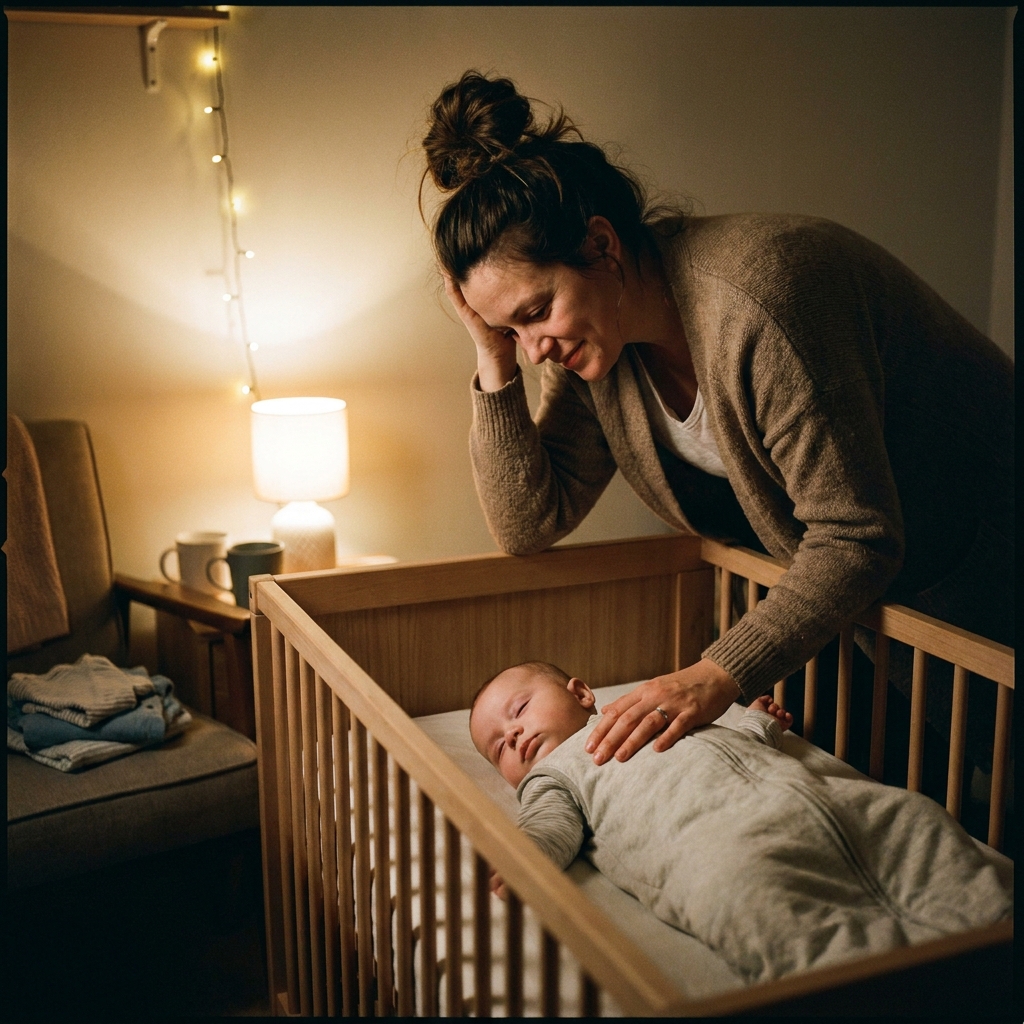
I went back to work when my daughter was 13 weeks old. By week 11 I started trying to give her a bottle of expressed milk. She turned her head, clamped her mouth shut, and looked at me like I had personally betrayed her.
By week 12 I had bought four different bottles, watched 23 YouTube videos, paid for a feeding consultant, and developed a low-level dread of every late afternoon when my husband would try the bottle while I hid in the bedroom listening to her scream.
She took the bottle by week 14. Here is the exact sequence that worked, after every other approach had failed.
Why breastfed babies refuse bottles
There are three real reasons, and most refusing babies are dealing with at least two of them.
First, the breast and the bottle require different mechanics. On the breast, a baby's tongue and jaw work together to pull milk out. On a bottle, milk comes faster with less effort, and the suck-swallow rhythm is different. Some babies get confused early and refuse to switch.
Second, breastfed babies form a strong association between mum + breast + smell + comfort = food. A bottle from mum violates that pattern. The cues do not match.
Third, the timing matters. There is a window roughly between 4 and 8 weeks where most breastfed babies will accept a bottle if offered occasionally. Miss that window, and by 10 weeks the resistance gets significantly harder.
If you are reading this past 10 weeks, do not panic. It just takes more patience and more strategies.
When to start
If you know you are going back to work, on holiday, or just need flexibility, the ideal time to introduce one bottle a day is between weeks 4 and 6. Before week 4 risks confusing the latch while breastfeeding is still being established. After week 8 raises the refusal risk.
If you missed the window because you did not plan to need the bottle, or because the baby refused early and you stopped trying, you can still get there. It just takes a longer ramp.
The 4-week timeline that works
This is built for a baby between 10 and 16 weeks old who is refusing or has never tried a bottle. Adjust pace based on how it goes.
Week 1: Set up and explore
Buy three different bottle brands. Do not commit to one yet. The most consistent winners for breastfed babies in our community:
- Comotomo (silicone, soft, looks like a breast, easy to clean)
- Dr Brown's natural shape (long teat, slow flow, mimics breastfeeding rhythm)
- Tommee Tippee Closer to Nature (wide teat, breast-shaped, popular in the UK)
Buy a slow flow teat (size 1 or "newborn") regardless of how old your baby is. Breastfed babies pace themselves slower than bottle-fed babies, and a fast teat triggers immediate refusal.
Do not try to feed her yet. Just let her play with the empty bottle for 5 minutes at random times. Let her chew on the teat. Make it a normal object in her hands before you try to put food in it.
Week 2: Other person, small attempts
This is the week your partner or another caregiver takes over bottle attempts. Mum needs to be out of the house, or at minimum in a different room with the door closed. Your baby can smell you, and if she knows the milk source is two metres away, the bottle will not win.
Your partner sits in a different chair than the breastfeeding chair. Holds her in an upright position, not the cradle position you use for breastfeeding (the upright position triggers her brain to expect a bottle, not the breast). Offers warm expressed breast milk in the bottle.
If she screams, stop after 5 minutes. Try again in 90 minutes. Do this three times a day every day. Do not let it become a battle. Five minutes of trying, then stop and offer the breast as normal.
Week 3: Refine the technique
By now you have probably found a bottle she tolerates slightly more than the others. Commit to that one.
Three specific techniques that increase acceptance:
1. Warm the teat under hot water for 30 seconds before offering. A cold rubber teat is jarring after a warm breast. A warm teat closer to body temperature is far more acceptable. 2. Touch the teat to her lips and wait for her to open her mouth. Do not push the bottle in. Treat it like a latch: she has to come to it. Hold the teat to her lips for up to 20 seconds. When she opens, slide it in gently. 3. Practise paced bottle feeding (holding the baby upright and the bottle horizontal so milk does not flood her mouth, letting her control the pace). This mimics breastfeeding rhythm and dramatically reduces refusal. The baby decides when to swallow, not gravity.
Week 4: Consistency and one feed a day
By week 4 most babies will take at least a small amount from the bottle. Switch to one full bottle feed per day, ideally at the same time of day so her body anticipates it.
Once she takes a full feed reliably, you do not need to give her a bottle every day. Even one bottle every 3 to 4 days is enough to maintain her willingness to take it. Less than once a week and the refusal can come back.
What to do if she is still refusing at week 4
A small number of babies are determined bottle refusers. If you have done everything above and she still will not take it:
- Try a different temperature. Some babies prefer cold milk straight from the fridge, not warmed. Counterintuitive but it works for about 1 in 10 refusers.
- Try a different position. Lying on her back on your lap, facing away, in a baby carrier facing out. The position that works for the next baby is rarely the position the book suggests.
- Try a sippy cup or soft-spout straw cup instead. Babies over 4 months can drink from these with help, and some will take a sippy cup when they will not take a bottle. Munchkin 360 cups and Doidy cups are the usual recommendations.
- If you are going back to work soon, talk to your nursery or childminder. Babies often take bottles from nursery staff that they refuse from family. Something about the new environment overrides the breast association.
- Cup feeding or syringe feeding can keep her fed for short periods if all else fails. Most NHS health visitors will show you the technique.
The truth about returning to work
You do not need her to take a perfect bottle before you go back. Most babies adapt within two days of you actually leaving the house, even if they refused the bottle from you for weeks at home. The cue that the breast is genuinely not available changes everything.
If you can leave her with milk in a bottle, a soft-spout cup, or even an open cup for very short periods, your childcare provider will get her fed. She will not starve. Babies have been doing this since the start of paid childcare.
When refusing is something else
Most bottle refusal is behavioural and resolves with the techniques above. A small number of cases need medical input. Watch for:
- Refusing both breast and bottle (likely an illness or oral issue, not a bottle problem)
- Coughing, choking, or arching back during bottle feeds (could be reflux or aspiration, see your GP)
- Significant weight loss or fewer than 5 wet nappies per day after trying bottles for a week
- A baby over 6 months who has never accepted any feeding tool other than breast (worth getting evaluated for oral motor delay)
What to tell yourself at week 3
The version of your baby who refuses the bottle is not the version who will be eating yoghurt and roast chicken in six months. She is learning a new skill, and the resistance is normal, not personal.
You are not failing at feeding her. You are doing the harder version of weaning to flexibility, which is the version most breastfed babies need. By the time you actually go back to work, she will be drinking from the bottle in your absence, looking around the room, perfectly fine, while you cry in the staff toilets at 11am. That is also normal.
You have not done anything wrong. She will get there.