
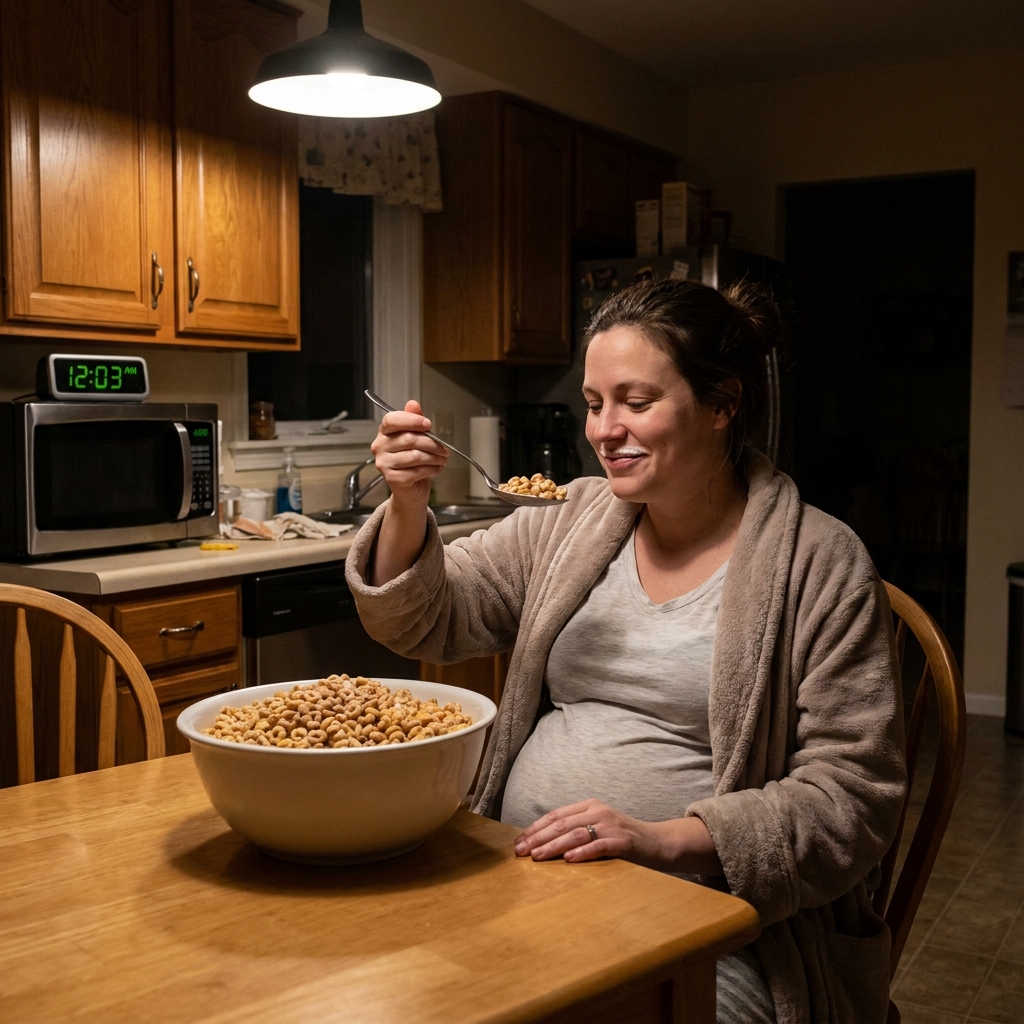
The phone call was short. "Your glucose tolerance test came back elevated. We need to refer you to the gestational diabetes clinic." Then a leaflet, an appointment in 10 days, and the rest of the week trying to figure out what I was actually allowed to eat.
If you have just been diagnosed with gestational diabetes (a form of diabetes that develops during pregnancy and usually resolves after birth), you are probably scared. You should know that with a managed diet, the vast majority of pregnancies with gestational diabetes have healthy outcomes for both mum and baby. The diet is the main tool, and once you understand the actual logic, it is much less restrictive than the leaflet suggests.
Here is what worked for me, including a real 7-day meal plan that does not feel like punishment.
What gestational diabetes is and why diet matters so much
Gestational diabetes happens when pregnancy hormones make your cells temporarily resistant to insulin (the hormone that lets sugar move from your blood into your cells for energy). The result: blood sugar levels run higher than normal after meals.
Untreated, this can lead to a baby that grows too big for vaginal birth, a higher risk of pre-eclampsia, and a higher risk of the baby needing care for low blood sugar after birth. None of these are inevitable. Managed properly, they are largely preventable.
The diet works by spreading carbohydrates more evenly through the day in small amounts, pairing them with protein and fat to slow absorption, and choosing carbohydrates that release sugar slowly rather than spiking it.
This is not a low-carb diet. You are not allowed to go very low carb in pregnancy because your baby needs glucose for brain development. The goal is controlled carbs, not restricted carbs.
The three rules that drive everything
Every meal and snack you eat should follow these three rules. Most other guidance is a variation on these.
Rule 1: Always pair carbs with protein and fat
A piece of fruit alone spikes blood sugar. A piece of fruit with a tablespoon of peanut butter does not. A slice of toast alone spikes. Toast with eggs and avocado does not.
Protein and fat slow the rate at which the carbs break down into sugar. Every single meal and snack should have this pairing. This is the most important rule.
Rule 2: Smaller portions, more often
Three big meals a day will spike your blood sugar regardless of what is in them. The structure that works for most women is three meals plus three snacks, spread roughly every 2.5 to 3 hours through the day.
The snacks are not optional. They prevent the big swings that come from waiting too long between meals.
Rule 3: Watch the morning specifically
Fasting blood sugar (the level when you first wake up) is often the hardest number to control because pregnancy hormones peak overnight. Breakfast carbs spike harder than the same carbs at lunch.
Many women with gestational diabetes need to keep breakfast carbs low (under 30g) while having more flexibility at lunch and dinner. A bowl of porridge alone will fail. Eggs and avocado on one slice of seeded toast will pass.
The foods that work (and the surprising ones that do not)
Foods that consistently keep blood sugar stable
- Eggs (any style)
- Greek yoghurt (full fat, plain)
- Cheese (especially harder cheeses like cheddar and parmesan)
- Nuts and seeds (almonds, walnuts, pumpkin seeds)
- Avocado
- Olive oil
- Berries (strawberries, blueberries, raspberries) in moderation
- Leafy greens (spinach, kale, rocket)
- Cruciferous vegetables (broccoli, cauliflower, Brussels sprouts)
- Beans and lentils
- Salmon, mackerel, tinned tuna
- Chicken, turkey, lean beef
- Whole grain bread (one slice at a time, seeded if possible)
- Wholegrain pasta in small portions
- Quinoa, brown rice, barley in small portions
Foods that surprise people by spiking blood sugar
- White rice and white pasta (even small portions)
- Most cereals labelled "healthy" (Special K, Bran Flakes, granola)
- Fruit juice and smoothies (concentrated sugar without the fibre)
- Bananas (especially ripe ones)
- Grapes
- Pineapple
- Dried fruit
- Rice cakes
- Most low-fat yoghurts (sugar replaces the fat)
- Instant porridge or flavoured porridge sachets
- Pizza dough
- White bread of any kind
You are not banned from any of these forever. You just have to test what each one does to your specific blood sugar and adjust portion sizes or pair them differently. Some women tolerate small amounts of brown rice fine. Others spike from two tablespoons.
A real 7-day meal plan
This is a sample plan that hits the three rules and works for most women. Test your blood sugar after meals as your diabetes team has instructed, and adjust based on your readings.
Monday
- Breakfast: 2 eggs scrambled with spinach, half an avocado, 1 slice seeded rye toast
- Snack: Greek yoghurt with a tablespoon of almonds
- Lunch: Chicken salad with mixed leaves, cucumber, tomato, olive oil, 2 tablespoons quinoa
- Snack: Apple slices with peanut butter
- Dinner: Salmon, roasted broccoli and cauliflower, 3 tablespoons brown rice
- Evening snack: Small handful of mixed nuts and 1 oatcake with cheese
Tuesday
- Breakfast: Full fat Greek yoghurt with berries, walnuts, and a sprinkle of pumpkin seeds
- Snack: 2 oatcakes with cream cheese
- Lunch: Lentil soup, 1 slice seeded toast with butter, side salad
- Snack: Carrot sticks with hummus
- Dinner: Beef stir-fry with mixed vegetables, 4 tablespoons cauliflower rice
- Evening snack: Cheese and 4 almonds
Wednesday
- Breakfast: Mushroom and spinach omelette, 1 slice rye toast, half avocado
- Snack: Pear with cheese
- Lunch: Tinned tuna mixed with mayo on a bed of leaves, half a wholegrain pitta
- Snack: Greek yoghurt with cinnamon
- Dinner: Roast chicken thigh, roasted vegetables, small portion sweet potato (test response)
- Evening snack: 2 squares dark chocolate (85 percent) with a few almonds
Thursday
- Breakfast: Smoked salmon and cream cheese on 1 slice seeded toast, with cucumber
- Snack: Hard boiled egg and 5 cherry tomatoes
- Lunch: Chicken and avocado salad, olive oil dressing, small portion brown rice
- Snack: Apple and 4 walnuts
- Dinner: Cod baked with lemon, sautéed greens, 2 small new potatoes
- Evening snack: Greek yoghurt with strawberries
Friday
- Breakfast: Scrambled eggs on 1 slice rye toast, 2 rashers bacon, side of avocado
- Snack: Cheese and 4 oatcakes
- Lunch: Greek salad with feta, olives, cucumber, tomato, olive oil, half a wholegrain pitta
- Snack: Greek yoghurt with raspberries
- Dinner: Homemade chicken curry with cauliflower rice and a small portion brown rice
- Evening snack: Small handful of almonds
Saturday
- Breakfast: Veggie scramble (eggs, mushrooms, peppers, spinach, cheese), 1 slice seeded toast
- Snack: Pear with peanut butter
- Lunch: Egg mayo on 1 slice wholegrain toast (open sandwich), large side salad
- Snack: Hummus with vegetable sticks
- Dinner: Steak with chimichurri, roasted vegetables, small portion sweet potato
- Evening snack: Cottage cheese with cinnamon
Sunday
- Breakfast: Full English (eggs, bacon, sausage, mushrooms, tomatoes, 1 slice seeded toast)
- Snack: Apple with cheese
- Lunch: Roast chicken with green vegetables and a small portion of roast potatoes
- Snack: Greek yoghurt with seeds
- Dinner: Salmon, asparagus, courgette, 2 tablespoons quinoa
- Evening snack: Square of dark chocolate and 4 almonds
The bedtime snack actually matters
Almost every woman with gestational diabetes is told to have a snack between dinner and bed, but rarely told why or what. Without it, your fasting blood sugar in the morning runs higher because your body is producing glucose through the night to compensate for the long gap.
The right bedtime snack is small, high in protein, and contains a small amount of slow carbohydrate. Examples that work:
- 1 oatcake with peanut butter
- Greek yoghurt with a tablespoon of seeds
- Hard boiled egg with a few almonds
- Small handful of mixed nuts and 1 piece of cheese
Eat this snack within 30 minutes of going to bed, not 2 hours before.
When to call your diabetes team
For most women, the diet manages it. A few signs that you need a same-week call:
- Multiple fasting readings above your target despite eating the bedtime snack
- Post-meal readings consistently above target even after adjusting carb portions
- You feel shaky, sweaty, or confused (sign of low blood sugar, especially if you are on insulin)
- Sudden swelling in the hands or face, severe headache, or vision changes (could indicate pre-eclampsia, which is more common in gestational diabetes)
- Reduced fetal movement at any point
Most diabetes teams are responsive within 24 hours. If you cannot reach yours and you have signs of pre-eclampsia or reduced movement, go to the maternity assessment unit.
What to tell yourself this week
You did not cause this. Gestational diabetes is largely driven by the placenta and pregnancy hormones, not by something you ate or did not eat earlier in pregnancy. Some bodies are simply more sensitive to the insulin resistance pregnancy creates.
It almost always resolves within hours of birth. By your six-week postpartum check, your blood sugar will most likely be back to normal. You will need to be checked for type 2 diabetes risk going forward (gestational diabetes increases your lifetime risk), but the immediate diagnosis ends at birth.
For the next few weeks, this is the plan. Three meals, three snacks, protein with every carb, smaller portions more often, bedtime snack. The first week feels overwhelming. By week two, the routine settles. By week three, you stop thinking about it and just eat this way.
You are doing the important work of growing a healthy baby with a condition that has a real treatment. The treatment is mostly what is on your plate. You are not deprived. You are just eating in a structured way for a short period of your life, and your baby will be the better for it.