
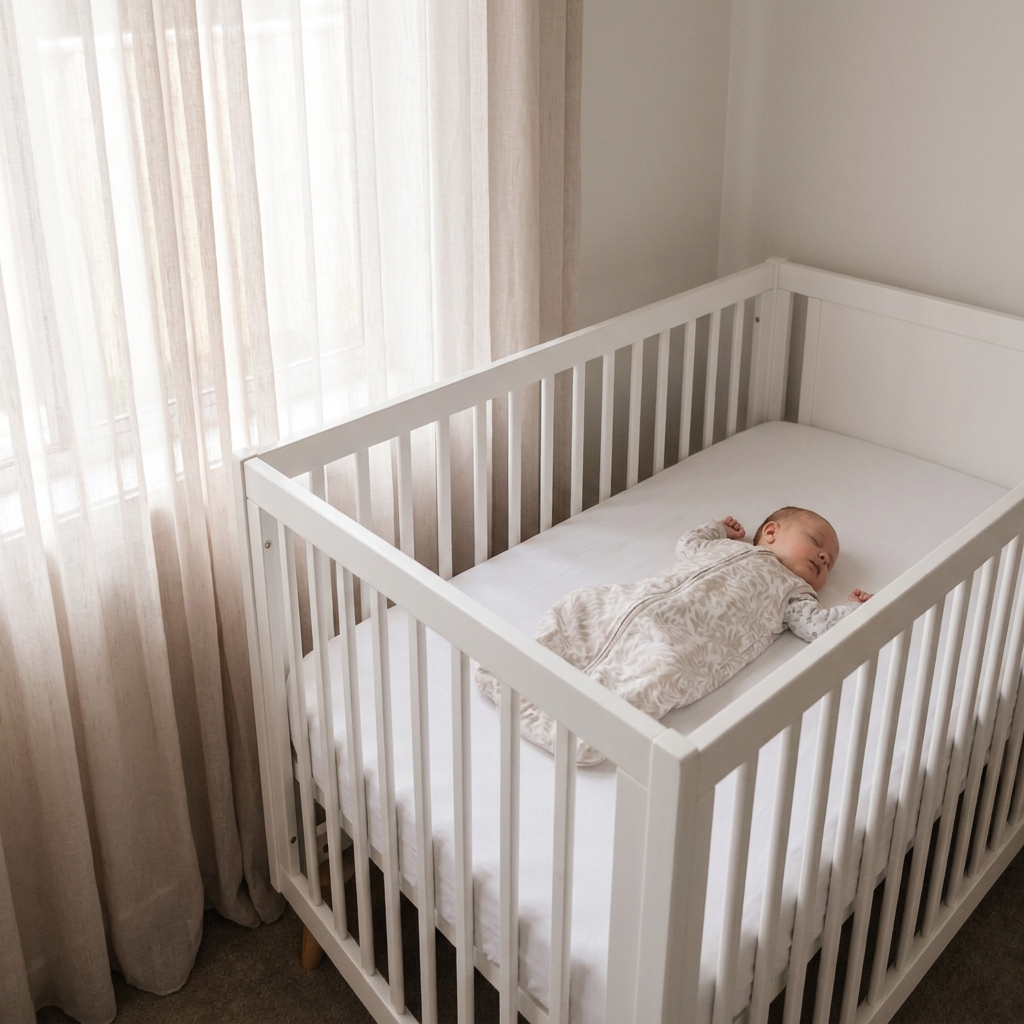
At my daughter's 12-month check, the health visitor mentioned that the bedtime bottle should be on its way out. By 14 months she was still having it. By 15 months I tried to drop it cold turkey and that night bedtime took two hours, included a tantrum so severe she vomited, and ended with me caving and giving her the bottle at 9:45pm.
Three weeks later I tried a different approach. By 16 months the bottle was gone, bedtime took 20 minutes, and nobody cried. Here is the gradual method.
Why dropping the bedtime bottle matters (and why the advice often feels rushed)
There are real reasons health professionals push for dropping the bottle by 12 to 18 months.
Dental health. Milk pooling in the mouth overnight is one of the biggest causes of early childhood tooth decay. If your toddler falls asleep with milk on her teeth, the bacteria have eight hours to work on them. By age 3, severe bottle-related decay can mean general anaesthesia for dental work, which everyone wants to avoid.
Sleep association. A toddler who needs a bottle to fall asleep needs a bottle every time she wakes up overnight too. Removing the bottle as a sleep crutch reduces night waking by age 2 in most cases.
Excess calories. A 14-month-old who drinks 8 oz of milk before bed plus 8 oz on waking is consuming 320 calories in milk before any solid food. This often leads to poor appetite for actual meals, which then becomes its own picky-eating problem.
But the advice often comes with no method attached. "Drop the bottle by 12 months" is repeated like a rule, with no help for how. The cold-turkey method works for some toddlers and is brutal for others. The gradual method below is what worked for us and for most parents I know.
When to drop it (and when to wait)
The right time depends on your child, not the calendar.
Good signs you can start:
- She is 12 months or older
- She is taking water from a sippy or open cup during the day
- Her bedtime routine has at least one element other than the bottle (a song, a book, a cuddle)
- She is generally settling for sleep within 15 to 20 minutes once in bed
Hold off if:
- She is in the middle of any other big change (starting nursery, new sibling, moving house, illness)
- She is sleep-trained but only fragilely so and any disruption sends bedtime sideways for weeks
- You are under 14 months and she is using the bottle for actual hunger (some 12-month-olds still need the calories)
There is no rush. A toddler who keeps the bedtime bottle until 16 or 18 months is not damaged. As long as you brush her teeth after the bottle (not before), the dental risk is manageable for a few extra months.
The gradual method that works
This takes about 10 to 14 days. The goal is to slowly remove the association between bottle and sleep so that by the end, she does not even notice the bottle is gone.
Days 1 to 3: Move the bottle earlier in the routine
Currently the bottle is probably the very last thing before sleep. She drinks it lying down or in your arms in bed, and falls asleep on it.
Move it. Give the bottle in the kitchen, downstairs, in normal clothes, before bath. Then do bath, pyjamas, books, song, bed. The bottle is now disconnected from the going-to-sleep moment.
This is the most important step. Some toddlers will protest at first, but most accept the new placement within two nights.
Days 4 to 6: Reduce the volume
Slowly cut the bottle amount by 1 oz every two nights. If she was having 8 oz, give 7 oz on day 4, 6 oz on day 6, 5 oz on day 8, and so on.
She probably will not notice a 1 oz drop. She might notice 2 oz, which is why you go slowly. Replace any milk you have removed with water in a cup at the dinner table.
Days 7 to 10: Switch from bottle to open cup
Once the volume is down to about 3 to 4 oz, transition the milk into a small open cup or a soft-spout cup. The Munchkin 360, Doidy cup, or any small open cup with a low rim works.
Keep the cup in the kitchen at the original new time (right before bath). She sips her milk while you tidy the kitchen. It is no longer a special pre-bed event, it is just a drink before the evening starts.
Some toddlers cling to the bottle shape itself. If she refuses the cup, go down to 2 oz in the bottle for three more nights, then try the cup again. Most toddlers accept it on the second attempt.
Days 11 to 14: Drop it entirely (or move to a small dinner-time milk)
By day 11, she is having a tiny amount of milk in a cup well before bedtime. You can now either drop it entirely (she gets milk with meals and water with her bedtime routine), or move it to dinner.
Dropping it entirely is cleaner. The whole bedtime routine becomes: bath, pyjamas, books, song, bed. No milk associated with sleep at any point.
What to do when she asks for the bottle at 9pm
She will. Probably on night 6 or 7 when the volume drop becomes noticeable.
Stay calm. Stay kind. "We have water before bed now. I will get you some water." Offer the water in her usual cup. Hold the line.
Some children accept this within one or two nights. Some test it for a week. The longest reasonable testing window is about 14 days. If after 14 days she is still inconsolable at bedtime, regroup: maybe she was not actually ready and you can hold off another month.
What to do at 2am wakings during the transition
If she has been waking for a bottle at night (the night feed that often shadows the bedtime bottle), you may need to drop that simultaneously, or it will become the new place she demands milk.
The same gradual method applies: water down the bottle slightly each night until it is essentially water, then switch to water in a cup, then drop it entirely. Most toddlers stop waking for a water-only bottle within a week.
If the night waking is severe and you cannot get back to sleep, consider this a separate sleep-training problem and address it after the bedtime bottle is fully gone. Do not try to do both at once.
When the resistance is something else
For most toddlers, the gradual method works inside two weeks. A few signs that suggest something else is going on:
- She is genuinely waking up hungry at 5am because she was not getting enough calories (work with your health visitor on whether you need to redistribute calories earlier in the day)
- She is using the bottle to soothe a different need, often around teething pain or sensory overload (address the underlying need rather than holding the line)
- The resistance is paired with broader feeding anxiety, refusing other foods too (worth talking to a paediatric feeding specialist)
What to tell yourself on night 6
She is not going to be deprived. She is not going to associate this transition with you being unkind. She is going to learn, within 14 days, that bedtime works perfectly well without the bottle.
The version of your toddler who needed the bottle to sleep is six months younger than the version standing in the cot tonight. She is more capable than you give her credit for, and the slight bedtime grumbling is the cost of that growing up.
You are not taking something away from her. You are giving her a better bedtime, a better mouth, and a longer stretch of sleep. By month two with no bottle, she will not remember it existed. You will not either.
Stay the course. Two weeks. You can do two weeks.